

 Inquire(
How to Choose Period Underwear by Flow: Light, Moderate, Heavy, and Overnight
 Jul 10,2026
 lynmiss
Period underwear labels can be surprisingly confusing.
One brand may use “Light,” “Moderate,” and “Heavy,” while another offers “Regular,” “Super,” or “Overnight.” Some products list absorbency in milliliters, while others compare their capacity with tampons or pads.
So, what absorbency period underwear do you actually need?
The answer depends on more than how heavy your period feels. Your daily routine, how often you can change, your sleeping position, the coverage of the absorbent area, and whether you use period underwear alone or as backup protection all matter.
This guide explains the differences between light, moderate, heavy, and overnight period underwear so you can choose a level that feels comfortable and dependable for your body.
Period Underwear Absorbency Levels at a Glance
| When you may wear it | Suggested absorbency | When to change | Helpful design features |
|---|---|---|---|
| Period beginning or ending, spotting, discharge | Light | Change when it begins to feel damp or uncomfortable | Thong, bikini, or lightweight brief |
| Average daytime flow | Moderate | Based on personal flow and comfort | Bikini, hipster, or full brief |
| Heavier days or limited access to a bathroom | Heavy | Check regularly and change according to your flow | Wider absorbent panel and secure leg openings |
| Sleeping, long hours, or frequent nighttime leaks | Overnight | Put on a fresh pair before bed | Extended front-to-back coverage |
These are general guidelines rather than fixed rules. Menstrual flow varies greatly from person to person and can also change from one cycle to the next.
How Do Period Underwear Absorbency Levels Work?
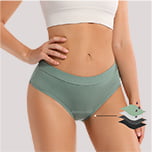
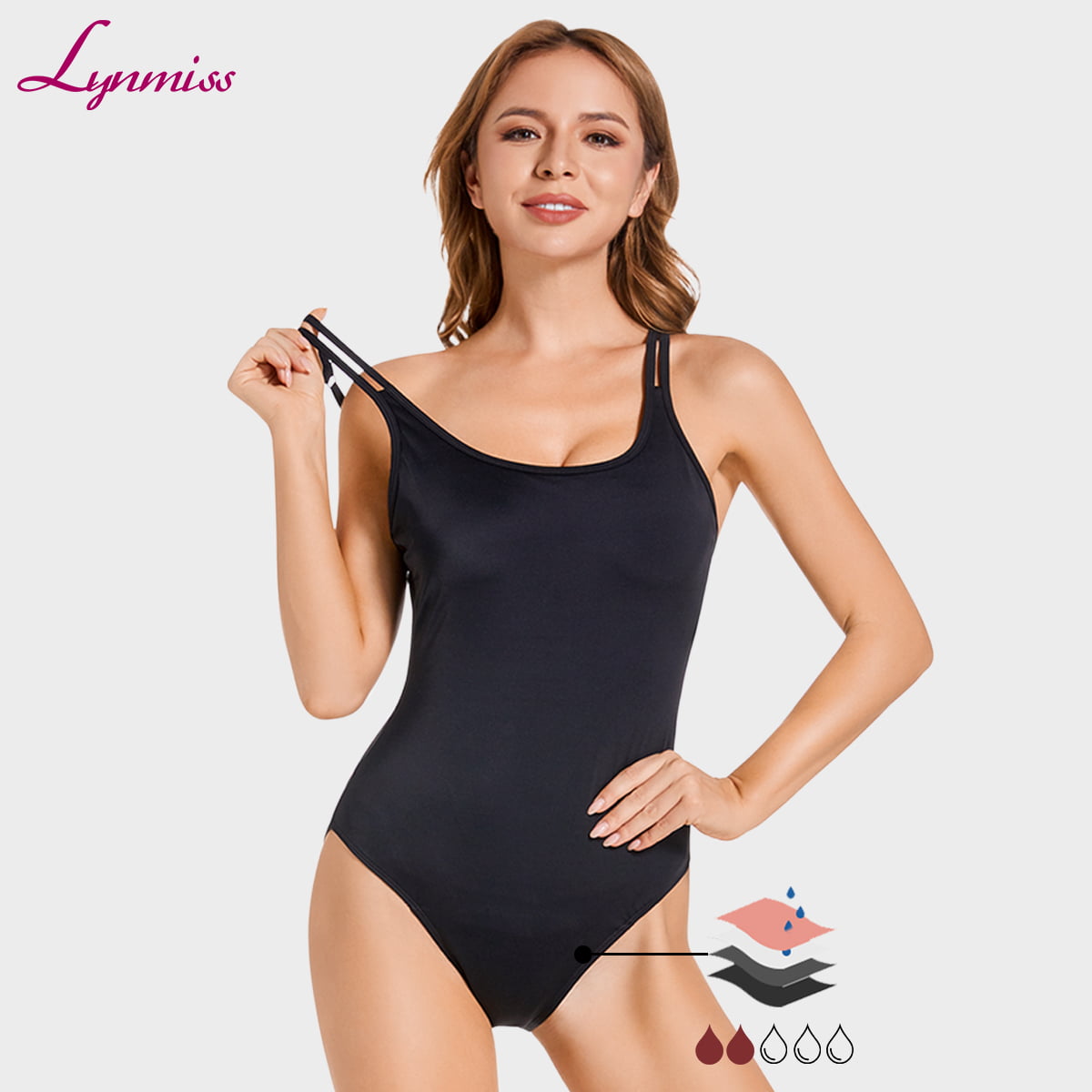
Period underwear usually contains several functional layers inside the gusset.
Depending on the product, these layers may include:
-
A moisture-wicking top layer that helps move liquid away from the skin
-
An absorbent core that holds menstrual fluid
-
A waterproof or leak-resistant membrane
-
An outer fabric that provides softness, stretch, and structure
Higher absorbency does not always mean simply adding a thicker layer.
To create different protection levels, manufacturers may adjust:
-
The density and capacity of the absorbent core
-
How quickly liquid moves through the top layer
-
The length and width of the protected gusset
-
The position of the waterproof membrane
-
The construction around the leg openings
-
The balance between absorbency and breathability
This is why two pairs both labeled “Heavy” can perform differently.
When comparing period underwear absorbency levels, look beyond the marketing name. Pay attention to the absorbent capacity, gusset coverage, fit, fabric, and intended use.
Light-Flow Period Underwear
Light-flow period underwear is designed for small amounts of menstrual fluid.
It may be suitable for:
-
The first signs of your period
-
The final days of your cycle
-
Spotting between periods
-
Very light or irregular flow
-
Backup protection with a tampon, cup, or pad
-
Everyday discharge
Because less absorbent material is required, period underwear for light flow often feels thinner and more similar to regular underwear.
Common Light-Flow Styles
You may find light absorbency in:
-
Thongs
-
Bikini briefs
-
Low-rise styles
-
Seamless underwear
-
Lace or mesh designs
These styles can be useful when you want discreet protection without the fuller coverage of a heavier pair.
However, light absorbency may not be enough for a full day during the heavier part of your cycle. If you notice dampness, side leakage, or menstrual fluid reaching the edge of the absorbent panel, it may be time to move up to a moderate level.
Moderate-Flow Period Underwear
Moderate-flow period underwear is often the most versatile option for regular daytime use.
It may work well for:
-
Average-flow days
-
School or office hours
-
Short trips
-
Wearing alone during a manageable flow
-
Backup protection on heavier days
Moderate styles usually offer more absorbent capacity than light-flow underwear while remaining relatively slim and comfortable under clothing.
What to Look for in Moderate Absorbency
A well-designed moderate-flow pair should provide:
-
Enough gusset width for your body
-
Secure but comfortable leg openings
-
An absorbent panel that matches where your flow usually lands
-
Breathable fabric
-
A fit that stays close to the body without digging in
Some people can wear moderate flow period underwear for several hours, while others may need to change much sooner.
Instead of relying only on a suggested number of hours, pay attention to your own comfort. A damp feeling, unusual heaviness, odor, or liquid reaching the edge of the gusset can indicate that it is time to change.
Heavy-Flow Period Underwear
Heavy-flow period underwear is made for days when you need greater absorbency and more secure coverage.
It may be helpful for:
-
The heaviest days of your period
-
Long work or school days
-
Travel days
-
Postpartum bleeding after medical approval
-
Backup protection with another menstrual product
-
People who regularly experience leaks through standard underwear
Heavy-flow designs usually contain a higher-capacity absorbent core and may have a wider or longer protected area.
Heavy Flow Is Not Only About Capacity
A product may claim to absorb a large amount of liquid, but real-life protection also depends on how quickly that liquid is absorbed.
Menstrual flow does not always arrive slowly. Sudden gushes can overwhelm a material that holds a high total volume but absorbs too slowly.
For heavy days, look for a product that balances:
-
Absorbent capacity
-
Fast liquid distribution
-
Wide gusset coverage
-
Secure side protection
-
A close, stable fit
Women who experience very heavy bleeding may still prefer to use period underwear as backup with a menstrual cup, tampon, or pad.
Overnight Period Underwear
Overnight period underwear is designed for longer wear and sleeping movement.
This category is sometimes confused with heavy-flow underwear, but the two are not always identical.
Heavy Flow vs Overnight Period Underwear
Heavy-flow underwear focuses mainly on increased absorbent capacity.
Overnight underwear usually combines absorbency with extended coverage.
During sleep, menstrual fluid may move toward the front or back of the underwear depending on your sleeping position. This is why many overnight styles extend the protective panel farther toward the waistband.
Overnight period underwear may be a better choice if you:
-
Frequently leak at the back while sleeping
-
Sleep on your back or stomach
-
Move or turn frequently during the night
-
Want longer front-to-back protection
-
Prefer not to combine underwear with a disposable pad
A fresh pair should normally be put on before bed. In the morning, change according to your flow, comfort, and the care guidance provided for the product.
For especially heavy nights, you may still need to combine overnight period underwear with another menstrual product or change during the night.
How to Estimate Your Flow Level
You do not need to measure every milliliter of menstrual fluid to choose period underwear.
Start by thinking about how you currently use pads, tampons, cups, or other menstrual products.
You May Have a Light Flow If:
-
You mostly experience spotting
-
A light pad usually provides enough protection
-
Your period is beginning or ending
-
You mainly want backup protection
You May Have a Moderate Flow If:
-
You normally use regular pads or tampons
-
Your flow is manageable during a typical work or school day
-
You do not often experience sudden heavy leaks
-
You can access a bathroom when needed
You May Have a Heavy Flow If:
-
You often soak through standard menstrual products quickly
-
You experience sudden gushes
-
You regularly leak through underwear or clothing
-
You need high-capacity protection or product combinations
You May Need Overnight Protection If:
-
Leaks usually happen while you are sleeping
-
Fluid travels toward the back waistband
-
Your usual heavy-flow underwear does not provide enough coverage
-
You want additional protection during long hours in bed
Your flow may also change throughout the same period. You might use moderate absorbency during the day, heavy absorbency on your strongest-flow day, and overnight underwear for sleeping.
Building a small period underwear collection with more than one absorbency level is often more practical than buying every pair in the same style.
Look Beyond the Absorbency Label
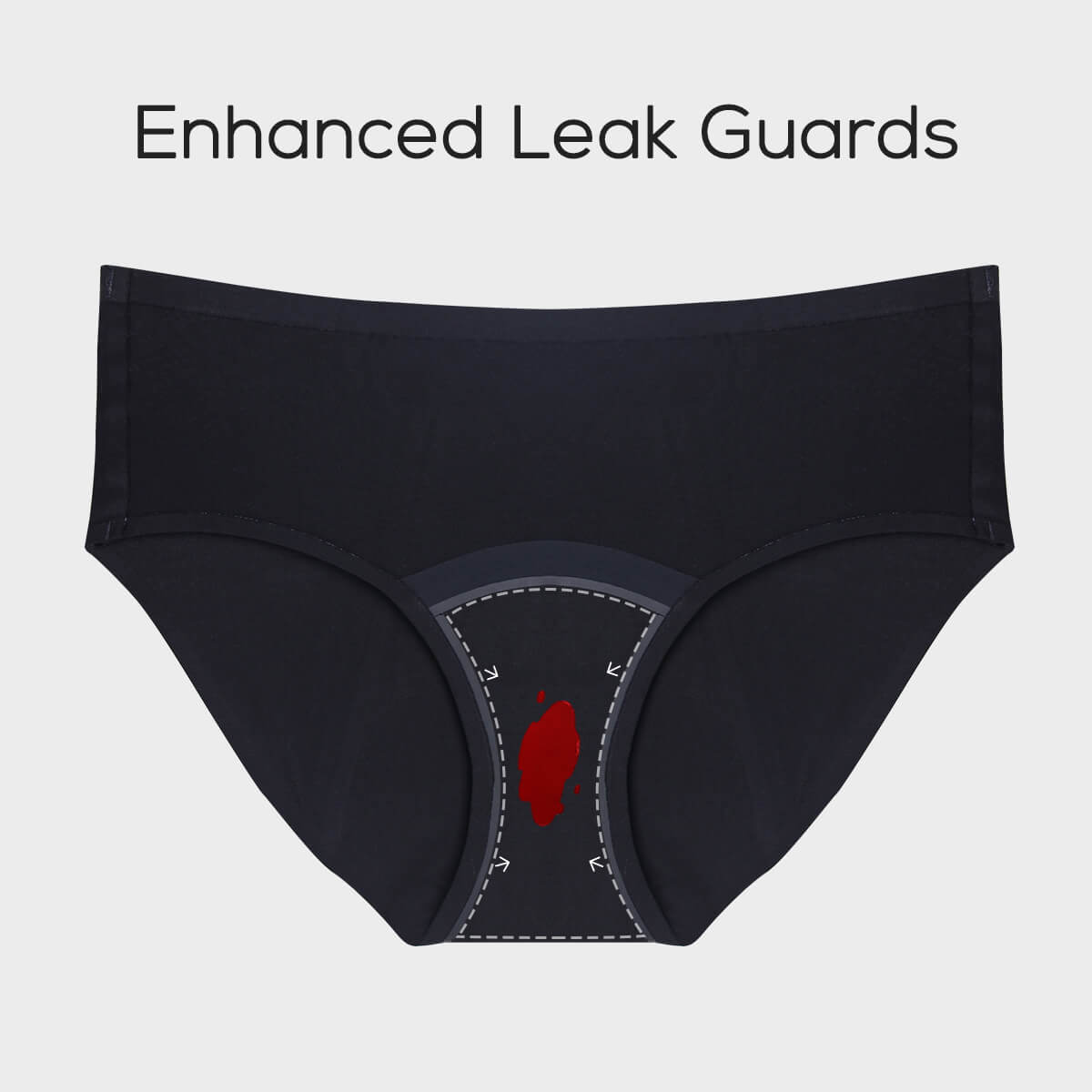
Absorbency is important, but it is only one part of leak protection.
Before choosing a pair, also consider the following factors.
1. Gusset Length
The gusset is the protected section inside the underwear.
A longer gusset can be helpful for sleeping or for anyone whose flow tends to move toward the front or back. A shorter gusset may feel lighter but may not provide enough coverage for every body.
2. Gusset Width
A wider absorbent panel may offer better side coverage, particularly during heavy flow or movement.
However, the gusset must still sit in the correct position. A wide panel that shifts away from the body may not protect as well as a properly fitted one.
3. Absorption Speed
Fast absorption helps manage sudden flow before liquid spreads toward the edges.
This can be especially important during heavy days, after standing up, or after sitting for a long time.
4. Leg Opening Construction
Gaps around the legs may allow liquid to escape before the absorbent core reaches its full capacity.
The underwear should sit close to the body without feeling restrictive.
5. Fabric and Breathability
Cotton, bamboo-derived fabrics, microfiber, and other materials can feel very different against the skin.
Choose a fabric that feels comfortable for your climate, activity level, and sensitivity. Breathability matters, especially when wearing period underwear for several hours.
6. Fit and Size
Period underwear that is too loose may shift and create gaps. A pair that is too tight can feel uncomfortable and may cause the gusset to sit incorrectly.
Use the brand’s current size chart rather than automatically ordering your usual underwear size.
Why Two Products With the Same Label May Perform Differently
There is no single universal system that every period underwear brand uses.
One company’s “Moderate” may be similar to another company’s “Heavy.” Absorbency comparisons based on tampons or pads can also vary because those products do not all hold exactly the same amount.
Construction quality makes a difference too.
Different absorbency levels require careful coordination between the absorbent core, moisture-transfer layer, waterproof membrane, gusset dimensions, stitching, and leak-resistant edges. It is not simply a matter of making the underwear thicker.
This type of product engineering is also important for brands developing customized menstrual underwear. Lynmiss Factory works with different absorbency structures, gusset coverage options, fabrics, and leakproof constructions for period underwear product development.
For individual shoppers, the practical lesson is simple: check the full product description and design details instead of choosing only by the word printed beside the absorbency level.
When Should You Change Period Underwear?
There is no single changing schedule that applies to everyone.
You may need to change your period underwear when:
-
The gusset begins to feel wet
-
The underwear feels heavier than usual
-
Menstrual fluid is approaching the edge of the protected area
-
You notice discomfort or odor
-
You have reached the product’s recommended capacity
-
You are preparing to sleep or begin a long journey
Your changing frequency may be different on the first, second, and final days of your period.
When trying a new pair, test it at home or on a day when you can change easily. This can help you understand how it performs with your individual flow.
Can You Wear Period Underwear Alone?
Many people wear period underwear alone during light or moderate flow.
Others use it as backup protection with:
-
Tampons
-
Menstrual cups
-
Menstrual discs
-
Disposable or reusable pads
Whether period underwear can replace other products depends on your flow, the underwear’s capacity, how long you plan to wear it, and how comfortable you feel using it alone.
There is no correct menstrual routine for everyone. The best system is the one that helps you feel secure, comfortable, and prepared.
How Many Absorbency Levels Do You Need?
You probably do not need every available style.
A practical starter collection might include:
-
One or two light pairs for spotting and the end of your period
-
Several moderate pairs for normal daytime use
-
One or two heavy pairs for stronger-flow days
-
One or two overnight pairs with extended coverage
Your ideal combination will depend on how often you do laundry and whether you use period underwear alone or with another menstrual product.
Frequently Asked Questions
What absorbency period underwear do I need?
Choose light absorbency for spotting or very light days, moderate absorbency for average daytime flow, heavy absorbency for stronger-flow days, and overnight underwear when you need longer front-to-back coverage while sleeping.
Your individual flow and changing routine are more important than the product label alone.
Is heavy-flow period underwear the same as overnight underwear?
Not always.
Heavy-flow underwear usually emphasizes absorbent capacity. Overnight period underwear often combines higher capacity with an extended protective panel to help prevent leaks while lying down or changing sleeping positions.
Can I wear light-flow period underwear all day?
Possibly, if your flow remains light and the underwear still feels dry and comfortable.
However, light-flow styles are not designed for every stage of a period. Change the underwear when it begins to feel damp or when liquid approaches the edge of the absorbent area.
How do I know when period underwear is full?
Common signs include dampness, heaviness, fluid reaching the edges of the gusset, or leakage.
Because different products manage moisture differently, it may take a few wears to learn how a specific pair feels as it approaches capacity.
Should I size up for heavy-flow period underwear?
Not automatically.
Period underwear should fit closely enough to prevent gaps but should not dig into the skin. Follow the brand’s size chart and check your hip and waist measurements before ordering.
Can period underwear handle sudden gushes?
Some designs manage sudden flow better than others.
Look for moisture-wicking materials, fast liquid distribution, adequate gusset width, secure leg openings, and reliable waterproof coverage. Total absorbent capacity alone does not guarantee fast gush protection.
What should I wear on the heaviest day of my period?
Consider heavy-flow period underwear, possibly combined with another menstrual product if your bleeding is especially strong.
If you repeatedly soak through menstrual products very quickly or experience a sudden change in bleeding, consider speaking with a healthcare professional.
Final Thoughts
Choosing the right period underwear absorbency level becomes easier when you focus on how and when you will wear it.
Light absorbency works well for spotting and the beginning or end of a period. Moderate absorbency is a versatile option for ordinary daytime flow. Heavy absorbency provides additional capacity for stronger days, while overnight underwear offers extended coverage for sleeping and longer wear.
Most importantly, listen to your body.
Your period may not match a brand’s label perfectly, and your needs can change throughout your cycle. Start with the level that best reflects your current routine, monitor how the underwear feels, and adjust your absorbency or changing schedule when necessary.
The right period underwear should help you feel supported—not make you worry about whether your flow fits into a category.
recommended to you
-
How to Clean and Maintain Menstrual Underwear During Period
April,13,2023 -
How to ensure that menstrual panties are comfortable and fit in size?
April,15,2023 -
Why are menstrual pants a more eco-friendly choice?
April,27,2023 -
The Benefits of Washable Cloth Pads: A Sustainable Choice for Women
September,18,2023 -
The Ultimate Guide to Choosing the Best Period Panties Manufacturer
October,12,2023
How Can We Help you ?